Chapter 9. Agriculture and Food Mangagement
Kharif and Rabi Crops
In India, the agricultural year is divided into two primary cropping seasons based on the monsoon cycle: Kharif and Rabi.
Kharif Crops (Monsoon Crops)
Kharif crops are sown at the beginning of the southwest monsoon (June-July) and harvested in autumn (September-October). These crops require hot, humid weather and substantial rainfall for growth.
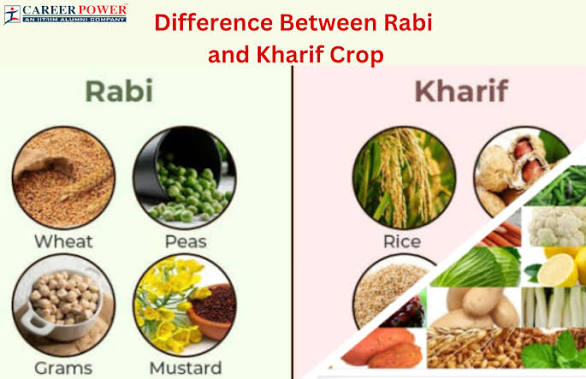
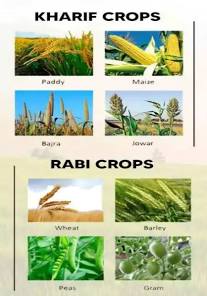
- Major Crops: Rice (paddy), maize, bajra (pearl millet), jowar (sorghum), soybean, cotton, groundnut, and pulses like moong and urad.
- Key Regions: Primarily grown in West Bengal, Assam, Odisha, Andhra Pradesh, and Maharashtra.
Rabi Crops (Winter Crops)
Rabi crops are sown after the monsoon ends (October-December) and harvested in spring (March-April). They thrive in cooler temperatures and require less water, often relying on irrigation or winter rains from Western Disturbances.
- Major Crops: Wheat, barley, mustard, peas, gram (chickpea), and linseed.
- Key Regions: Dominate northern and north-western states like Punjab, Haryana, and Uttar Pradesh.
Comparison at a Glance
| Feature | Kharif Crops | Rabi Crops |
|---|---|---|
| Sowing Time | June – July (Onset of Monsoon) | October – December (Post-Monsoon) |
| Harvesting Time | September – October (Autumn) | March – April (Spring) |
| Climate | Warm and Humid | Cool and Dry |
| Water Source | Rain-fed (High dependence) | Irrigated (Moderate to Low) |
| Examples | Rice, Maize, Cotton, Soybean | Wheat, Mustard, Gram, Barley |
Zaid crops are also grown in a short third season between March and June, including fruits like watermelon and vegetables like cucumber.
Food philosophyof India
Ramesh Singh’s “Food Philosophy of India” defines the nation’s agricultural journey in distinct phases aimed at moving from scarcity to food security and, finally, to nutritional security. It emphasizes a shift from achieving physical availability (first phase) to economic access (second phase), focusing on self-sufficiency, reducing import dependency, and addressing hunger through policy.
Key aspects of this philosophy as outlined in Indian Economy include:
- Phase I: The Production Focus (Post-Independence to 1980s): The main goal was ensuring physical availability of foodgrains, culminating in the Green Revolution.
- Phase II: The Accessibility Focus (1990s to early 2000s): Despite achieving self-sufficiency, India struggled with economic access to food. This phase addressed the paradox of high buffer stocks alongside persistent hunger, leading to initiatives like “Food for Work”.
- Phase III: Nutritional Security (Current & Future): Moving beyond calories to nutrient-dense food, enhancing purchasing power, and improving supply chain management to reduce waste.
- Policy Directions: Emphasizes agricultural reform, biotechnology, crop diversification, and strengthening the Public Distribution System (PDS) to ensure food security for all.
The philosophy underlines that as a welfare state, India’s ultimate goal is ensuring not just availability, but the availability of sufficient, affordable, and nutritious food for its entire population.
Land Reforms
Land reforms in India refer to government-led institutional measures designed to restructure land ownership, tenancy, and management to ensure social justice, reduce rural poverty, and increase agricultural productivity. Key components include abolishing intermediaries (e.g., Zamindari), enacting tenancy reforms, imposing land ceiling laws, and consolidating fragmented holdings.
Key Components of Land Reforms in India:
- Abolition of Intermediaries: Aimed at removing middlemen (Zamindars) between the state and the tiller, bringing around 2 crore tenants into direct contact with the government.
- Tenancy Reforms: Focused on providing security of tenure, regulating rent, and conferring ownership rights to tenants.
- Land Ceilings: Imposed limits on the maximum land an individual or family can hold, with the goal of redistributing surplus land to landless farmers. Roughly 52.93 lakh acres of surplus land have been redistributed.
- Consolidation of Holdings: Aims to reduce fragmentation of land holdings to make cultivation more efficient.
- Modernization of Records: Ongoing initiatives include digitizing land records, implementing the Unique Land Parcel Identification Number (ULPIN) or Bhu-Aadhar.
Objectives and Impact:
- Social Justice: Redistributing land to reduce extreme wealth inequalities in rural areas.
- Economic Productivity: Encouraging better land use and modernization of agricultural practices.
- Challenges: Implementation has been hindered by legal loopholes, lack of political will, poor record-keeping, and evasion, resulting in mixed success across different states.
Current Focus:
Modern land reforms in India, supported by the Department of Land Resources, now emphasize digitizing 98.5% of rural records, creating a National Generic Document Registration System (NGDRS), and improving efficiency in land administration.
Green Revolution
In Ramesh Singh’s Indian Economy, the Green Revolution (GR) is presented as a pivotal shift from traditional subsistence farming to an industrial agricultural system.
Key Components (The “Package” Approach)
The GR was not a single change but a package of interrelated inputs:
- HYV Seeds: The “Dwarf” variety (non-photosynthetic) that favored grain over straw.
- Chemical Fertilizers: High-concentration NPK (Nitrogen, Phosphorus, Potassium) to meet the heavy nutrient needs of HYV seeds.
- Irrigation: Controlled water supply to ensure fertilizer dilution and crop growth.
- Plant Protection: Use of chemical pesticides, germicides, and weedicides.
- Infrastructure: Rural electrification, roads, storage, and easy credit (World Bank-supported).
Questions & Answers (Ramesh Singh Perspective)
Q: Why did the Green Revolution overshadow Land Reforms in India?
A: There was an intrinsic conflict: the GR favored large, economically viable holdings for machine use, whereas Land Reforms aimed at redistribution into smaller plots. Additionally, the urgent need for food security and international pressure (World Bank) made productivity a higher priority than institutional equity.
Q: Is India truly “Self-Sufficient” post-GR?
A: India achieved physical self-sufficiency (high stocks in central reserves) by the late 1980s. However, Ramesh Singh notes a lack of economic access, meaning many still go hungry because they cannot afford the food produced.
Q: What are the primary ecological concerns mentioned?
A: Soil degradation from repetitive cropping, falling water tables due to high water needs of HYV seeds, and toxicity in the food chain from excessive pesticide use.
Mnemonics for Remembering GR
Use these tricks to remember the essential facets for competitive exams:
- To Remember Positive Effects: “REVOLUTION”
- R – Raised agricultural production
- E – Employment generation
- V – Varieties of crops improved
- O – Overcoming food shortages
- L – Livelihood improvement
- U – Urbanization support
- T – Technological advancements
- I – Infrastructure development
- O – Output sustainability
- N – National income increase
- To Remember Core Inputs: “F.I.S.H.”
- F – Fertilizers (Chemical)
- I – Irrigation (Controlled)
- S – Seeds (High Yielding Variety)
- H – Herbicides/Pesticides
- To Remember the First 7 Districts: “T.W.S.R.A.L.P.” (The Package Programme/IADP)
- Thanjavur, West Godavari, Shahabad, Raipur, Aligarh, Ludhiana, Pali.
- In his Indian Economy series, Ramesh Singh describes the Second Green Revolution (SGR) as a shift from “Production-Centric” to “Sustainability and Income-Centric” agriculture. While the first revolution saved India from starvation, the second aims to save the soil and the farmer.
- Core Objectives (The “Evergreen” Vision)
- The SGR is often synonymous with M.S. Swaminathan’s “Evergreen Revolution,” focusing on perpetual improvement in productivity without ecological harm.
- Regional Spread: Shifting the focus from the North-West (Punjab/Haryana) to Eastern India (BGREI programme) and rain-fed areas.
- Crop Diversification: Moving beyond the “Wheat-Rice” duopoly to include pulses, oilseeds, and millets.
- Sustainable Tech: Integrating biotechnology (Genetically Modified crops), precision farming, and organic/natural farming.
- Economic Access: Ensuring food is not just produced but affordable for all through improved rural purchasing power.
- Questions & Answers (Competitive Exam Focus)
- Q: How does the SGR differ from the first Green Revolution?
- A: The first focused on quantity (High Yielding Varieties) and was limited to irrigated wheat/rice belts. The second focuses on quality and sustainability, covering dryland farming and pulses while emphasizing soil health.
- Q: What is the “Gene Revolution”?
- A: This is a component of the SGR that leverages genetic engineering to create drought-resistant and pest-resistant crops to counter climate change.
- Q: What government schemes drive the Second Green Revolution?
- A: Key schemes include:
- BGREI: Bringing Green Revolution to Eastern India.
- PMKSY: Pradhan Mantri Krishi Sinchai Yojana (“Per Drop More Crop”).
- PM-PRANAM: Aiming to reduce chemical fertilizer use.
- Soil Health Card Scheme: For balanced nutrient management.
- Mnemonics for SGR
- To Remember Core Goals: “S.M.A.R.T.”
- S – Sustainability & Soil Health (Organic/Natural farming)
- M – Millets & Diversification (International Year of Millets)
- A – Affordability & Economic Access
- R – Rain-fed & Eastern Region Focus (BGREI)
- T – Technology (Biotech/Digital agriculture)
- To Remember Input Shifts: “E.C.O.”
Cropping pattern
Cropping patterns refer to the spatial and temporal sequence of crops grown on a specific area of land over time, optimized for productivity and sustainability. Key types include monocropping (one crop yearly), mixed cropping (simultaneous growth), intercropping (row-based), and crop rotation. Influenced by climate (rainfall, temperature), soil type, and technology, these patterns maximize resource use, maintain soil fertility, and reduce pest risks
.
Key Types of Cropping Patterns
- Monocropping: Growing the same crop on the same land every year, often leading to soil nutrient depletion.
- Mixed Cropping: Growing two or more crops simultaneously on the same land without a fixed row arrangement.
- Intercropping: Growing two or more crops together in a specific, ordered row pattern to enhance productivity and reduce pests.
- Crop Rotation: Changing the type of crop grown in a field every season or year to restore soil nutrients and reduce pest buildup.
Factors Influencing Cropping Patterns
- Climate & Weather: Rainfall and temperature patterns (e.g., monsoon vs. winter crops).
- Soil Fertility & Type: Different soils suit different crops (e.g., black soil for cotton).
- Technology & Infrastructure: Availability of high-yielding varieties (HYV), irrigation, and machinery.
- Socioeconomic Factors: Market demand, government support prices, and labor availability.
Common Seasonal Patterns in India
- Kharif (Monsoon): June-July to Oct-Nov; includes rice, maize, and cotton.
- Rabi (Winter): Oct-Dec to March-April; includes wheat, barley, and mustard.
- Zaid (Summer): March-April to June-July; short season for vegetables, watermelon, and cucumber.
Importance
Implementing proper cropping patterns is crucial for sustainable agriculture, preventing soil erosion, improving soil fertility, reducing pest infestations, and maximizing farm profits.
Animal Rearing
Animal rearing is a cornerstone of India’s rural economy, supporting nearly 55% of the rural population and contributing over 30% to the agricultural sector’s Gross Value Added. As the world’s largest livestock owner (53+ crore population), India is a global leader in milk production and has the highest buffalo population. The sector provides essential income, food security, and employment through cattle, buffalo, goat, sheep, and poultry farming.
Key Aspects of Animal Rearing in India
- Economic Impact: The livestock sector contributes about 4.11%–4.35% to India’s total GDP and supports 8.8% of the population with employment. It is a major source of livelihood for small and marginal farmers, particularly empowering women in rural areas.
- Livestock Population (20th Census – 2019):
- Bovines: India has the largest bovine population (303.76 million), including cattle, buffalo, and yaks.
- Buffalo: India leads the world in buffalo population.
- Goats/Sheep: India ranks second in goat population (148.88 million) and third in sheep (74.26 million).
- Poultry: The industry is growing rapidly, with India as the third largest egg producer (129-142+ billion eggs).
- Key Products:
- Dairy: India is the world’s largest milk producer (230.58+ million tonnes).
- Meat/Eggs: Meat production has grown significantly (10.25 million tonnes), along with substantial egg production.
- Other: Production of wool (41.5 million Kg), leather, and manure for agriculture.
- Traditional & Cultural Importance: Livestock are integral to rural life, providing fuel, fertilizer, and labor for farming.
- Challenges & Sustainability: Traditional methods often face challenges with productivity and environmental impact. Modern initiatives focus on improving genetic quality of breeds, veterinary care, and promoting sustainable, intensive, and semi-intensive farming to increase income.
Food Management ramesh singh
In the context of the highly-regarded book “
Indian Economy“ by Ramesh Singh (a core resource for UPSC aspirants), “Agriculture and Food Management” is typically covered in Chapter 8.
The section focuses on the transition from ensuring physical food grain access to addressing economic access and modern sustainability. Key components include:
1. Food Management Framework
- Procurement & Storage: Managed primarily by the Food Corporation of India (FCI), focusing on buffer stocks and the Decentralised Procurement System to ensure price stability.
- National Food Security Act (NFSA) 2013: India’s largest social welfare programme, providing legal rights to subsidised foodgrains for approximately 80–82 crore people.
- Public Distribution System (PDS): Efforts to modernise PDS through doorstep delivery, ICT integration, and Aadhaar-linked identification to reduce leakages.
2. Agricultural Inputs & Management
- Fertilizers & Pesticides: Focus on moving away from imbalanced chemical use (like excessive urea) toward Integrated Pest Management (IPM) and bio-fertilisers to restore soil health.
- Irrigation Efficiency: Promoting schemes like PMKSY (“Per Drop More Crop”) and the Micro Irrigation Fund to combat water scarcity.
- Agri-Credit: Expanding institutional credit through Kisan Credit Cards (KCC) and the Agriculture Infrastructure Fund to help farmers invest in technology and better inputs.
3. Value Addition & Modernization
- Food Processing: A key pillar for reducing post-harvest wastage and creating rural livelihoods. Important schemes include the PM Kisan SAMPADA Yojana and the PLI Scheme for food processing.
- Supply Chain Management: Emphasising “Upstream” (sourcing/raw materials) and “Downstream” (processing/sales) requirements to build a more resilient agricultural market.
- Crop Diversification: Shifting focus from staple cereals (wheat/rice) to high-value crops like pulses, oilseeds, and millets to enhance farmer income and soil sustainability.
4. Emerging Concepts
- Natural Farming: Promoting chemical-free, agroecology-based systems like the Bharatiya Prakritik Krishi Paddhati (BPKP).
- Climate Smart Agriculture (CSA): Strategies to transform agricultural systems to support food security under the pressure of changing climate patterns.
MSP
MIS
Procurement Price Issue price Buffer Stock
Storage Economic Cost, Open market Sale, price stablization and Farm Subsidies
Food Security
PDS and Food Subsidies
Agriculture Marketing, Model APMC Act
Safegurading Agritech
Commodity future Market
Upsteaming and Downstreaming Requirement
Supply and Chain Management
Farm waste Debate
Irrigation (Cultureal Command Area MMM)
FarmMechanization SMAM
Seed Development
Fertilizers
Pesticides
Agriculture credit and farm subsidies, Farmer Suicides
Agriculture Extensive service
PMFBY
National Mission for sustainable Agriculture
WTO and Indian Agriculture
The World Trade Organization’s (WTO) Agreement on Agriculture (AoA), effective since 1995, significantly impacts Indian agriculture by aiming to liberalize trade through three pillars: market access, domestic support, and export subsidies. While offering potential for increased export earnings, it restricts India’s ability to provide high domestic price supports (like MSP) and mandates reduced trade-distorting subsidies.
Key Aspects of WTO and Indian Agriculture
- Agreement on Agriculture (AoA) Structure: The AoA is divided into three pillars:
- Market Access: Requires lowering tariffs and removing non-tariff barriers.
- Domestic Support: Subsidies are categorized into Boxes—Green (non-distortive), Blue (production limiting), and Amber (distortive).
- Export Subsidies: Seeks to eliminate subsidies that boost exports, which were phased out by 2023 per the Nairobi Ministerial Decision.
- Impact on India:
- MSP and Subsidies: India’s Minimum Support Price (MSP) programs are constantly scrutinized, as they can fall under the Amber Box, which has a 10% limit on subsidies for developing countries.
- Food Security: India has fought to protect its right to hold public stocks for food security, ensuring that public stockholding for food security is not challenged.
- Trade Opportunities & Challenges: While globalization has provided better access to global markets for Indian produce, it also exposes local farmers to international price volatility.
- TRIPs Impact: The Trade-Related Intellectual Property Rights (TRIPs) agreement raises concerns regarding the patenting of plant varieties, potentially transferring control to multinational corporations.
- Special and Differential Treatment: As a developing nation, India is allowed certain flexibilities under the AoA, including higher timeframes for reducing subsidies.
The tension between WTO regulations and the need to protect smallholder farmers and ensure food security remains a critical, ongoing discussion in international trade negotiations.
WTO and agriculture subsidies
The World Trade Organization‘s Agreement on Agriculture (AoA) regulates agricultural subsidies to reduce trade-distorting support. Subsidies are classified into “boxes” (Green, Blue, Amber) based on their impact on trade. While Amber box subsidies (linked to production) are limited, Green box (non-distorting) and Blue box (production-limiting) have fewer restrictions.
Key Aspects of WTO Agriculture Subsidies
- Amber Box (Trade-Distorting): These include production-linked subsidies, such as input subsidies (fertilizer, water) or Minimum Support Prices (MSP). Developed countries are restricted to 5% of production value, and developing countries to 10% (known as de minimis levels).
- Green Box (Non-Distorting): These are allowed without limits because they do not distort trade. Examples include R&D, environmental programs, and decoupled income support.
- Blue Box (Production-Limiting): These are Amber box subsidies that require farmers to limit production, making them exempt from reduction commitments.
- Export Subsidies: The 2015 Nairobi Ministerial Decision aimed to eliminate these, with specific exemptions under special and differential treatment for developing nations.
- Contention: A major issue is that developed nations often provide high levels of Amber Box support, making it difficult for developing countries to compete.
The Committee on Agriculture oversees these commitments to ensure fair competition and reduced trade distortion.
Amber Box
Blue Box
Green Box
S&D Box
The WTO “S&D Box” (Special and Differential Treatment) refers to exemptions in the Agreement on Agriculture that allow developing countries to provide specific, trade-distorting domestic support to farmers. These provisions allow developing nations to exceed standard reduction commitments, supporting food security and rural development through mechanisms such as input subsidies.
Key aspects of the S&D Box/Exemptions include:
- Purpose: To provide flexibility for developing countries, recognizing their different economic needs and to foster rural development.
- Exemptions: These measures often allow developing nations to maintain subsidies for subsistence farmers, input subsidies (fertilizers, seeds, electricity, irrigation), and other support that might otherwise be capped.
- Context: It sits alongside, or within, the broader WTO “traffic light” system of domestic support: Green Box (non-distorting), Blue Box (production-limiting), and Amber Box (distorting, subject to reductions).
- Significance: It serves as a tool to protect low-income/resource-poor farmers (LI/RP) from import surges and to improve domestic food production capabilities.
The S&D box is often contrasted with the “Development Box” proposals, which advocate for tighter, more specific protections for developing country agriculture.
Export subsidies
Saniary and Phytosanitary Measures
Sanitary and Phytosanitary (SPS) measures are World Trade Organization (WTO) rules used to protect human, animal, and plant life or health from risks like pests, diseases, and food contaminants.
Core Principles & Mnemonics
Use the mnemonic “STAR-H” to remember the five pillars of the SPS Agreement:
- S – Science-based: Measures must have a scientific justification or be based on risk assessment.
- T – Transparency: Governments must notify partners of new rules and maintain Enquiry Points.
- A – ALOP (Appropriate Level of Protection): Countries can set their own health standards but must be consistent.
- R – Regionalization: Rules should adapt to the disease-free status of a specific region rather than an entire country.
- H – Harmonization: Members are encouraged to follow international standards from the “Three Sisters“:
- Codex (Food safety)
- WOAH (Animal health)
- IPPC (Plant health)
Questions & Answers (with Mnemonics)
To remember what SPS covers, use the mnemonic “P.A.H.”:
- Q: What specifically does SPS protect?
- A: It covers Plants, Animals, and Humans from specific risks.
- Q: Does SPS cover animal welfare or consumer preference?
- A: No. Use the mnemonic “W.E.P.” (Welfare, Environment, Preference) to remember what is NOT covered; these often fall under TBT (Technical Barriers to Trade) instead.
- Q: What is the main difference between SPS and TBT?
- A: Think “Purpose vs. Type”. SPS is defined by its purpose (health/safety), while TBT is defined by the type of measure (technical regulations/labels).
- Q: Can a country ban a product if science is still uncertain?
- A: Yes. Under the “Precautionary Principle” (Article 5.7), temporary measures can be taken if scientific evidence is insufficient.
Types of Measures (Mnemonic: “H.I.L.T.P.”)
- H – Hygiene: Sanitary requirements for production.
- I – Inspection: Mandatory testing and certification.
- L – Limits: Maximum residue limits for pesticides or additives.
- T – Treatment: Processes like fumigation to kill pests.
- P – Prohibitions: Total bans on imports from disease-affected areas.
three sister
In the world of international trade, the
“Three Sisters” are the three standard-setting organizations recognized by the WTO’s SPS Agreement.
While the WTO sets the rules for trade, it doesn’t have its own scientists to decide how many pesticides are safe on an apple. Instead, it looks to these “Three Sisters” to provide the global benchmarks.
The Three Sisters: A Quick Guide
To remember which organization handles which area, use the mnemonic “CAP”:
| Sister | Full Name | Focus | Mnemonic |
|---|---|---|---|
| Codex | Codex Alimentarius Commission | Food Safety | Codex = Cooking/Consuming |
| Animals (WOAH) | World Organisation for Animal Health | Animal Health | Animals = Ailments (Vet care) |
| Plants (IPPC) | International Plant Protection Convention | Plant Health | Plants = Pests |
1. Codex Alimentarius (Food Safety)
- Established by: FAO and WHO.
- Role: They develop standards for food additives, pesticide residues, veterinary drug limits, and food labeling.
- Goal: To protect consumer health and ensure fair practices in food trade.
- Think of it as: The “Global Cookbook” for safety.
2. WOAH (Animal Health)
- Note: Formerly known as the Office International des Epizooties (OIE).
- Role: They collect data on animal diseases worldwide and set standards to prevent the spread of diseases (like Bird Flu or Swine Fever) through trade.
- Goal: Improving animal health and welfare globally.
- Think of it as: The “Global Vet Clinic.”
3. IPPC (Plant Health)
- Established by: FAO.
- Role: They create International Standards for Phytosanitary Measures (ISPMs). These prevent the introduction of invasive pests (like wood-boring beetles) via timber, fruit, or shipping pallets.
- Goal: To protect forests, crops, and biodiversity.
- Think of it as: The “Global Gardener/Shield.”
Why the “Three Sisters” Matter (The “Safe Harbor” Rule)
In WTO disputes, there is a concept called Harmonization:
- Presumption of Consistency: If a country bases its national laws on a “Three Sisters” standard, those laws are presumed to be WTO-compliant.
- Higher Standards: If a country wants to be stricter than the Sisters, they must provide strong scientific evidence (Risk Assessment) to prove why the international standard isn’t enough for their population.
Example: If the IPPC says a specific heat treatment kills a pest, but a country refuses to accept it and demands a much more expensive chemical treatment instead, that country might be accused of using SPS as a “hidden” trade barrier.
Questions & Answers for Revision
Q: Which Sister would handle a dispute over hormones in beef?
A: Codex. Since it involves a substance consumed by humans in food, it falls under food safety.
Q: If a country is worried about a beetle species in imported timber, which standards apply?
A: IPPC. This is a plant health (phytosanitary) issue regarding invasive pests.
Q: Can a country ignore the Three Sisters’ standards?
A: Yes, but they must have Scientific Justification. Without it, they will likely lose a WTO trade dispute.
To distinguish between the two, remember this key rule:
SPS is defined by its purpose (health), while TBT is defined by its type (technical regulations/labels).
If a measure is an SPS measure, it is excluded from the TBT Agreement.
SPS vs. TBT Comparison Table
| Feature | SPS (Sanitary & Phytosanitary) | TBT (Technical Barriers to Trade) |
|---|---|---|
| Primary Goal | Protect human, animal, or plant life/health. | Prevent deceptive practices, protect national security or the environment. |
| Product Scope | Mostly food & agriculture. | All products (industrial and agricultural). |
| Main Requirement | Must be based on science/risk assessment. | Must be based on a “legitimate objective”. |
| Standard Bodies | “Three Sisters” (Codex, WOAH, IPPC). | ISO, IEC, and other international bodies. |
| Example (Labels) | Labeling for food safety (e.g., allergen warnings). | Labeling for consumer info (e.g., textile origin or energy ratings). |
| Key Mnemonic | “S” is for Science and Safety. | “T” is for Technical and Type. |
Examples to Clarify the Difference
- Case 1: Fruit Juice Bottle.
- SPS: A rule requiring the juice to be pasteurized to kill bacteria (Purpose: Human Health).
- TBT: A rule requiring the bottle to be a specific shape or have a label showing the “recycling” symbol (Purpose: Environment/Standardization).
- Case 2: Beef Imports.
- SPS: A ban on beef from a country with Mad Cow Disease (Purpose: Animal/Human Health).
- TBT: A requirement that the package must state the percentage of fat (Purpose: Consumer Information).
Which one is it? (The Test)
If you are confused, ask: “Is the only reason for this rule to protect human, animal, or plant health?”
- Yes
→ It is SPS.
- No (It’s for quality, packaging, or info)
→ It is TBT.
NAMA
In the context of the World Trade Organization (WTO), NAMA stands for Non-Agricultural Market Access.
Key Details
- Definition: Refers to trade negotiations aimed at reducing or eliminating customs tariffs and non-tariff barriers on all products not covered by the Agreement on Agriculture.
- Product Coverage: Includes industrial goods, manufactured products, textiles, fuels, mining products, fish and fishery products, and forestry products.
- Significance: These products account for nearly 90% of the world’s merchandise exports.
- Negotiation Mandate: Established during the Doha Development Agenda in 2001, focusing on products of export interest to developing countries.
- Current Framework: Negotiations often use a “Swiss formula” to reduce higher tariffs more significantly than lower ones to harmonize global tariff levels
Swiss Farm
Here is the breakdown of how the
Swiss Formula and flexibilities function within NAMA negotiations.
1. The Swiss Formula
The Swiss Formula is a non-linear mathematical method used to reduce and “harmonize” tariffs. Its primary characteristic is that it cuts higher tariffs more deeply than lower ones.
- The Formula:
𝑇𝑓𝑖𝑛𝑎𝑙=𝐴×𝑇𝑖𝑛𝑖𝑡𝑖𝑎𝑙𝐴+𝑇𝑖𝑛𝑖𝑡𝑖𝑎𝑙
- Tinitialcap T sub i n i t i a l end-sub𝑇𝑖𝑛𝑖𝑡𝑖𝑎𝑙: Existing tariff rate.
- Tfinalcap T sub f i n a l end-sub𝑇𝑓𝑖𝑛𝑎𝑙: The new, lower tariff rate.
- Acap A𝐴: The “Coefficient,” which is a negotiated number.
- Key Impact: The coefficient Acap A𝐴 acts as a maximum ceiling. No matter how high the starting tariff is, the final tariff will never exceed the value of
𝐴.
- Negotiation Stakes: Developed countries typically push for a low coefficient (e.g., 8) to ensure very low global tariffs. Developing countries argue for a higher coefficient (e.g., 20–25) to preserve their domestic industries.
2. Flexibilities for Developing Countries
To ensure the principle of “Less than Full Reciprocity” (LTFR), developing nations are granted specific flexibilities to protect sensitive sectors:
- Lesser Cuts: Members can apply half of the formula cuts for up to 10% of their industrial tariff lines, provided these lines do not exceed 10% of their total NAMA import value.
- Exemptions: Alternatively, they can keep up to 5% of their tariff lines unbound or exempt from any cuts, provided they stay within 5% of their total NAMA import value.
- Sliding Scale: Under the 2008 proposals, a “sliding scale” was introduced where a member could choose a lower coefficient (more aggressive cuts) in exchange for higher flexibilities.
- Special Groups: Least-Developed Countries (LDCs) are generally exempt from formula cuts altogether, though they are encouraged to increase their “binding coverage”.
To see how the
Swiss Formula works in practice, let’s look at what happens to a 30% tariff if we use a coefficient (
Acap A𝐴) of 20.
The Calculation
Using the formula:
𝑇𝑓𝑖𝑛𝑎𝑙=𝐴×𝑇𝑖𝑛𝑖𝑡𝑖𝑎𝑙𝐴+𝑇𝑖𝑛𝑖𝑡𝑖𝑎𝑙
- Identify the variables:
𝐴=20 (The negotiated coefficient)
𝑇𝑖𝑛𝑖𝑡𝑖𝑎𝑙=30 (The current tariff rate)
- Plug them into the formula:
𝑇𝑓𝑖𝑛𝑎𝑙=20×3020+30
- Solve:
𝑇𝑓𝑖𝑛𝑎𝑙=60050
- Tfinal=12%cap T sub f i n a l end-sub equals 12 %𝑇𝑓𝑖𝑛𝑎𝑙=12%
In this scenario, the tariff is slashed from 30% down to 12%.
Why the Coefficient Matters
The coefficient determines how “aggressive” the cut is. Look at how the same 30% tariff changes depending on the coefficient (
𝐴):
| If Coefficient ( | The 30% Tariff becomes… | Observation |
|---|---|---|
| 8 (Developed Country preference) | 6.3% | Very aggressive cut. |
| 20 (Middle ground) | 12% | Moderate cut. |
| 25 (Developing Country preference) | 13.6% | Softer cut, more protection. |
Two Key “Swiss” Rules:
- The Ceiling Rule: The final tariff will always be lower than the coefficient. If
𝐴=20, no tariff in that country will ever be higher than 20% after the cuts.
- The Narrowing Gap: Higher tariffs are pulled down much faster than lower ones. For example, using
𝐴=20:
- A 50% tariff drops to 14.2% (A reduction of ~72%).
- A 10% tariff drops to 6.6% (A reduction of ~34%
- Q1: What does NAMA cover in WTO trade?
Answer: NAMA covers all products not included in the Agreement on Agriculture. This includes industrial goods, electronics, textiles, fuel, and fish.
Mnemonic: “F.I.T. F.E.S.H.”
Fuel
Industrial goods
Textiles
Forestry
Electronics
Steel
Harvest (Fish)
Q2: What is the primary purpose of the Swiss Formula?
Answer: It is a mathematical tool used to reduce high tariffs more than low tariffs, aiming to harmonize global trade rates.
Mnemonic: “S.W.I.S.S.”
Slashes Wildly Inconsistent Steep Structures.
(It reminds you that it “slashes” the high, “wild” tariffs more aggressively to make them consistent.)
Q3: What are the “Flexibilities” for developing countries?
Answer: Developing countries are allowed to make smaller cuts or keep some products exempt from cuts to protect their local industries.
Mnemonic: “L.E.S.S.”
Lesser cuts (only 50% of the formula).
Exemptions (some lines stay unbound).
Small percentages (usually 5% or 10% of lines).
Sliding scale (pick a higher coefficient for less protection, or vice versa).
Q4: How does the Coefficient (
A
cap A
𝐴) affect the final tariff?
Answer: The coefficient acts as the “ceiling.” A lower coefficient means a more aggressive cut and a lower maximum tariff.
Mnemonic: “The A-Ceiling”
Just remember: “The ‘A’ is the Limit.”
If the coefficient (
𝐴) is 8, the tariff can never go Above 8.
Summary Table for Quick Review
Concept
Key Term
Mnemonic
Coverage
Industrial/Non-Agri
F.I.T. F.E.S.H.
Formula Goal
Harmonization
S.W.I.S.S.
Developing Rights
Special Treatment
L.E.S.S.
Coefficient
Maximum Limit
The A-Ceiling
National food security act
The National Food Security Act (NFSA), 2013, marks a “paradigm shift” in India’s approach to food security—moving from a welfare-based model to a rights-based legal entitlement.
1. Scope and Coverage
- Population Covered: The Act covers up to 75% of the rural and 50% of the urban population, totaling nearly two-thirds (67%) of India’s population based on Census 2011.
- Beneficiary Categories:
- Antyodaya Anna Yojana (AAY): The “poorest of the poor” households receive 35 kg of foodgrains per month.
- Priority Households (PHH): Eligible individuals receive 5 kg of foodgrains per person per month.
2. Financial Provisions (The 3-2-1 Rule)
- Subsidized Prices: Central Issue Prices (CIP) were initially set at ₹3/kg for rice, ₹2/kg for wheat, and ₹1/kg for coarse grains.
- Current Status: Under the Pradhan Mantri Garib Kalyan Anna Yojana (PMGKAY), these foodgrains are currently provided free of cost to all NFSA beneficiaries.
3. Life-Cycle Nutritional Support
- Mothers: Pregnant women and lactating mothers (PW&LM) are entitled to a free meal at Anganwadi centres and a maternity benefit of at least ₹6,000.
- Children:
- Age 0-6: Free meals via the Integrated Child Development Services (ICDS).
- Age 6-14: One free mid-day meal in schools.
- Malnourished Children: Higher nutritional standards are mandated for identified malnourished children up to age 6.
4. Institutional & Women Empowerment
- Head of Household: For the purpose of issuing ration cards, the eldest woman (18+ years) is recognized as the head of the family.
- Grievance Redressal: A tiered system involving District Grievance Redressal Officers (DGRO) and State Food Commissions.
- Food Security Allowance: If the government fails to supply entitled foodgrains, beneficiaries must be paid a cash allowance.
Mnemonics to Remember NFSA 2013
Mnemonic 1: “3-2-1 RIGHTS”
- 3-2-1: Prices for Rice (₹3), Wheat (₹2), and Coarse Grains (₹1).
- R – Rural (75%) & Urban (50%) coverage.
- I – Identification by State Governments.
- G – Grievance Redressal (DGRO & State Commission).
- H – Head of Family is the eldest woman.
- T – Targeted Public Distribution System (TPDS) reforms.
- S – Support for mothers (₹6,000) and children.
Mnemonic 2: “FACE” (Key Pillars)
- F – Foodgrains (5kg/person for PHH; 35kg/house for AAY).
- A – Allowance (Food Security Allowance if supply fails).
- C – Coverage (67% of the total population).
- E – Empowerment (Women as head of household).
The implementation of the National Food Security Act (NFSA) is evaluated through a formal index, and its benefits have been significantly enhanced by the extension of the free foodgrain scheme.
1. State Ranking Index for NFSA
The Department of Food and Public Distribution released the first “State Ranking Index for NFSA” to create a healthy competition among states. The index is built on three pillars: Coverage & Targeting, Delivery Platform, and Nutrition Initiatives.
Top Performing States (General Category)
- Odisha (Rank 1, Score: 0.836)
- Uttar Pradesh (Rank 2, Score: 0.797)
- Andhra Pradesh (Rank 3, Score: 0.794)
- Gujarat (Rank 4, Score: 0.790)
- Dadra & Nagar Haveli and Daman Diu (Rank 5, Score: 0.787)
Top Performing States (Special Category)
Includes North-Eastern, Himalayan, and Island states:
2. PMGKAY Free Foodgrain Extension
The Pradhan Mantri Garib Kalyan Anna Yojana (PMGKAY), which was originally a COVID-relief measure, has been fully integrated with the NFSA to provide foodgrains free of cost to approximately 81.35 crore beneficiaries.
- Extension Period: The Union Cabinet has extended the free foodgrain distribution for five years, effective from 1 January 2024 to 31 December 2028.
- Financial Commitment: The central government will bear an estimated subsidy of ₹11.80 lakh crore over this five-year period to ensure food security without any financial burden on the poor.
- Fortification: 100% of the rice supplied under PMGKAY and other welfare schemes is now fortified with Iron, Folic Acid, and Vitamin B12.
3. One Nation One Ration Card (ONORC)
The One Nation One Ration Card plan is now operational in all 36 States/UTs, allowing beneficiaries (especially migrants) to lift their entitled foodgrains from any Fair Price Shop (FPS) across the country using their existing ration cards.
Food processing
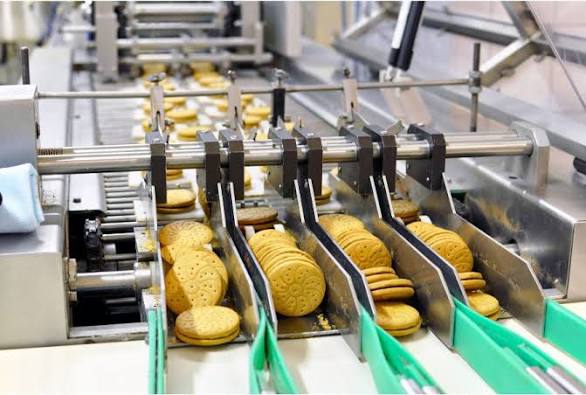
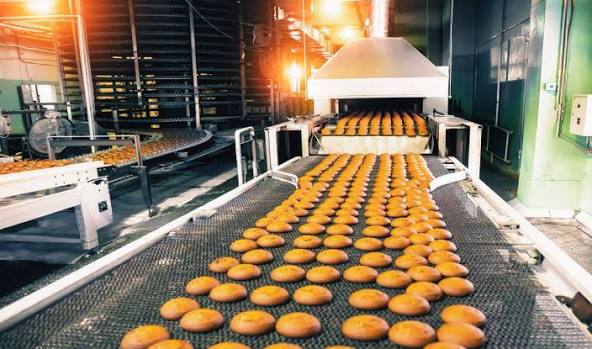
Food processing is the transformation of raw agricultural ingredients—such as grains, fruits, vegetables, meat, and dairy—into consumable food products through physical or chemical means. It ranges from simple home cooking to complex industrial manufacturing.
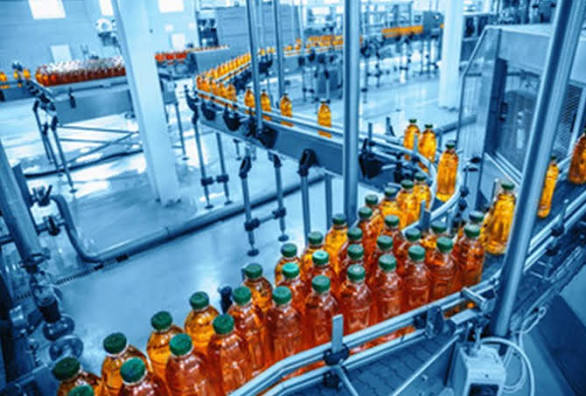
Stages of Food Processing
- Primary Processing: Turning raw products into basic food items that can be consumed or used further (e.g., milling wheat into flour, butchering meat, or pasteurising milk).
- Secondary Processing: Combining primary ingredients to create more complex foods (e.g., baking flour and water into bread or turning milk into cheese).
- Tertiary Processing: The commercial production of ready-to-eat or “ultra-processed” foods (e.g., frozen pizzas, snacks, and instant meals).
Common Methods & Techniques
- Preservation: Techniques like freezing, canning, and drying (dehydration) that inhibit microbial growth to extend shelf life.
- Heat Treatment: Includes pasteurisation (briefly heating to kill pathogens) and blanching (briefly boiling to stop enzyme activity).
- Fermentation: Using beneficial microbes to alter food, such as turning milk into yoghurt or grapes into wine.
- Size Reduction: Physical processes like milling, grinding, or slicing.
- Fortification: Adding essential vitamins and minerals to improve the nutritional profile of the food.
Importance and Impact
- Safety & Security: Processing removes harmful bacteria and prevents spoilage, ensuring a stable food supply year-round.
- Economic Value: In India, the sector accounts for 32% of the total food market and is a major source of employment and exports.
- Health Considerations: While processing can improve digestibility and safety, ultra-processed foods often contain high levels of added salt, sugar, and unhealthy fats, which are linked to chronic health issues.
The Indian government supports this sector through initiatives like the Pradhan Mantri Kisan SAMPADA Yojana (PMKSY), which focuses on building infrastructure like Mega Food Parks and Cold Chains.
To master food processing, focus on these key mnemonics and practice with the targeted Q&A for high retention.
1. Core Concepts Mnemonics
- The “F³” Rule (Food Supply Chain):
- Farm (Production) → Factory (Processing) → Fork (Consumption).
- “FLLAPIC” (Freezing Methods):
- Fluidized Bed, Liquid Nitrogen, Liquid CO2, Air Blast, Plate, Immersion, Cryogenic.
- “PIC FD” (Top 5 Preservation Techniques):
- Pasteurization, Irradiation, Canning, Fermentation, Dehydration.
2. Retention Q&A with Memory Cues
Q1: What is the primary difference between Pasteurization and Sterilization?
- A: Pasteurization kills harmful (pathogenic) microbes to extend shelf life (e.g., 72°C for 15s). Sterilization kills all microorganisms, including spores (e.g., 110°C for 10 min).
- Mnemonic: “Partial vs. Supreme.” Pasteurization is Partial (safe to drink, but spoilage eventually happens); Sterilization is Supreme (complete kill).
Q2: What are the three levels of food processing?
- A: Primary, Secondary, and Tertiary.
- Mnemonic:“PST” (like a whisper).
- Primary: Raw to basic (cleaning/milling).
- Secondary: Basic to ingredients (baking/fermenting).
- Tertiary: Ready-to-eat (frozen meals/convenience).
Q3: What is the main goal of Blanching before canning or freezing?
- A: To deactivate enzymes that cause spoilage, browning, or loss of flavor.
- Mnemonic: “B.E.S.T.” – Blanching Eliminates Spoilage Triggers (enzymes).
Q4: How does UHT (Ultra High Temperature) milk differ in storage?
- A: It can last several months without refrigeration until opened.
- Mnemonic: “UHT = Unbelievably High Tolerance.” It tolerates room temperature because it was treated at 135-150°C.
3. Specialized Retention Techniques
- Method of Loci (Memory Palace): Visualize your kitchen. Place the “Canning” jar on the counter, the “Freezing” bags in the freezer, and the “Dehydrator” by the window. Mentally walk through to recall the methods.
- Chunking: Group processing methods by their “engine”: Heat-based (Canning, Pasteurization), Cold-based (Freezing, Chilling), and Chemical-based (Pickling, Fermentation)
Importance
Rules regulations contribution , infrastructure Development , Mega food park Scheme cold chain, Value addition and preservation
Modernization of Abattoirs
The Mega Food Park Scheme and Integrated Cold Chain are core components of the Pradhan Mantri Kisan SAMPADA Yojana (PMKSY) managed by the Ministry of Food Processing Industries (MoFPI).
1. Mega Food Park Scheme (MFPS)
This scheme uses a cluster-based approach to link agricultural production to markets by bringing together farmers, processors, and retailers.
- Current Status: The scheme was discontinued for new projects as of April 1, 2021, with funding now only for committed liabilities of ongoing projects.
- Infrastructure: A typical park consists of:
- Central Processing Centre (CPC): The core hub with common facilities like cold storage, warehouses, and testing labs.
- Primary Processing Centres (PPCs) & Collection Centres (CCs): Farm-proximate units for cleaning, grading, and pre-cooling.
- Financial Assistance: Provided as a grant-in-aid of 50% of the project cost in general areas and 75% in difficult/hilly areas (up to ₹50 crore).
2. Integrated Cold Chain Scheme
The Integrated Cold Chain and Value Addition Infrastructure scheme aims to provide a continuous cold chain from the farm gate to the consumer without any break.
- Scope: Covers pre-cooling at the farm, multi-temperature cold storage, reefer vans, and mobile cooling units.
- Eligibility: Open to partnerships, companies, cooperatives, and Farmer Producer Organizations (FPOs).
- Financial Aid: Grant-in-aid of 35% for general areas and 50% for North East/hilly regions (maximum ₹10 crore).
3. Key Operational Mega Food Parks
As of late 2025/early 2026, several parks are fully operational, including:
- Gujarat Agro Infrastructure MFP: Located in Surat, focusing on industrial food processing.
- Srini Mega Food Park: India’s first, located in Chittoor, Andhra Pradesh.
- International Mega Food Park: Located in Fazilka, Punjab.
- Patanjali Food & Herbal Park: Located in Haridwar, Uttarakhand.
Value addition and preservation are critical strategies in agriculture and food science aimed at increasing the economic worth of raw commodities while extending their shelf life. While value addition transforms a product into a more desirable form, preservation focuses on maintaining its quality, safety, and nutritional integrity over time.
Core Concepts
- Value Addition: The process of enhancing a primary product through processing, packaging, or branding to command a higher market price. Examples include turning strawberries into jam or wheat into flour.
- Preservation: Techniques used to treat and handle food to stop or slow down spoilage. This ensures food is available during off-seasons and reduces post-harvest losses, which can be as high as 5–30% in some regions.
Key Techniques and Methods
- Physical Processing: Basic steps like cleaning, sorting, grading, and cutting increase a product’s appeal and market readiness.
- Thermal Treatments:
- Canning & Bottling: Heating food in sealed containers to destroy harmful microbes.
- Pasteurisation: Using temperatures below 100°C to kill pathogens while maintaining flavor.
- Moisture Removal:
- Drying/Dehydration: Reducing water content to inhibit microbial growth. Methods include sun drying, oven drying, and electric dehydrators.
- Temperature Control:
- Cold Storage & Freezing: Rapidly lowering temperatures (down to -18°C or lower for freezing) to stop biological activity.
- Cold Chain Infrastructure: Integrated systems of refrigerated transport and storage from farm to consumer.
- Chemical & Biological Methods:
- Pickling & Fermentation: Using salt, vinegar, or beneficial bacteria to preserve and add unique flavors.
- Additives: Using permitted chemicals like sulphur dioxide or benzoic acid to prevent spoilage.
- Advanced Technologies: Modern methods include Irradiation (using ionizing radiation to kill insects and microbes), Aseptic Packaging, and Modified Atmosphere Packaging (MAP).
Benefits of Value Addition
- For Farmers: Increases profitability, provides financial stability, and reduces the economic risk of marketing.
- For Consumers: Offers “ready-to-eat” convenience, improved nutritional quality (through fortification), and year-round availability of seasonal items.
- For the Economy: Generates employment in rural areas, reduces food waste, and enhances foreign exchange through exports.
In India, the Ministry of Food Processing Industries (MoFPI) supports these efforts through schemes like the Pradhan Mantri Kisan Sampada Yojana (PMKSY), which funds integrated cold chains and value addition infrastructure.
